Living Abroad

Teaching and Travelling
Teaching abroad is a great option for those who want to see different parts of the world, while still having a career and a steady paycheck. Full time teaching work in China on average will pay between CNY9,000 – 20,000/month. Given the cost of living in China, this is enough to cover day to day living expenses, including accommodation, eating out etc., as well as allowing you to save money each month to spend travelling. You can use this money to go on several short breaks around the country throughout your time in China, or else save your money and go on a longer trip around China and other parts of Asia during summer vacation.

3 Great Mountains to Visit this October Holiday
China’s five most renowned mountains, or Wu Yue 五岳, have been summited for several millennia, and should be on the to-do list of every china-enthusiast. Because of time-constraints (the October holiday is only seven days long), we will only discuss three today. For pointers on how to combine travelling with a teaching carreer, click here!

Letters and Numbers in Chinese Internet Slang
The use of Letters and Numbers in Chinese Internet Slang Most internet users know what the expressions U2 (you too) or ttyl (talk to you later) mean. Online, or in text messages many of us use acronyms to save time, but this phenomenon isn’t just limited to the English language. Over the past few years, the use of letters and numbers has become increasingly popular among Chinese netizens. Not just for the sake of brevity, but also to avoid widespread censorship. Disclaimer: As is true of most internet language, many of these expressions can be offensive. 88 拜拜 (bai bai) Typed at the end of a conversation, 88 simply means goodbye. The Chinese word for 8 八 (ba) sounds like the character拜(bai), the transliteration of the English “bye” 3Q 三Q (san Q) This simply is an informal transliteration of thank (三san, as the “th” is hard for Chinese to pronounce) you (Q)。 PS Photoshop This English expression is also popular on the Chinese internet. Netizens sometimes use “PS” to comment on (profile) pictures of girls, implying that Photoshop was used to make the actually ugly girl look beautiful. 250 二百五 er bai wu & 2 二 (er) In Chinese (internet/popular) culture these words have more-or-less the same meaning, and are used to describe an imbecile. It can be playfully used between two friends when either one does something silly, but when used between strangers it is an insult. 38 三十八 (san shi ba)/三八 (san ba) Someone who is 38 tends to gossip. 他很三十八- he is very gossipy. The word can be both a noun and adjective. 555… Any number of fives (五wu) sounds like 呜 (wu)an onomatopoeia for crying. E.g. I failed my midterm 5555555 🙁 BT 变态(bian tai) BT is an expression that recently became very popular. Often translated as psycho, the meaning is usually not that intense. It can both be used to describe a person who is abnormal or even perverted, as well as to describe a crazy action (adj). The meaning varies greatly as singing in public (silly) as well as groping a girl on the subway (perverted) can be described as BT. SB/2B 傻屄 (sha bi) Chinese kids may tell you SB simply means some body after having called you an SB, but the real meaning is actually very offensive. SB literally means stupid (傻) cunt (屄). Because 2 resembles S in shape, SB is sometimes written as 2B. Also, the character屄 is rarely used, and instead another word with the same pronunciation is written (e.g.逼). NB = 牛屄 (niu bi) When someone does something really cool or amazing (厉害 li hai), online commenters sometimes type NB, which simply means “awesome” or “badass”. Occasionally it is used to describe the opposite: a person pretending to be cool. A poser, tool or 装逼(zhuang bi). As is true of many (Chinese) words, the meaning usually depends on the context. Any character with the “bi” sound can be substituted for (屄). E.g. 牛逼/牛比 TMD 他妈的 (ta ma de) TMD simply means damn it, and is used when bad news is received.
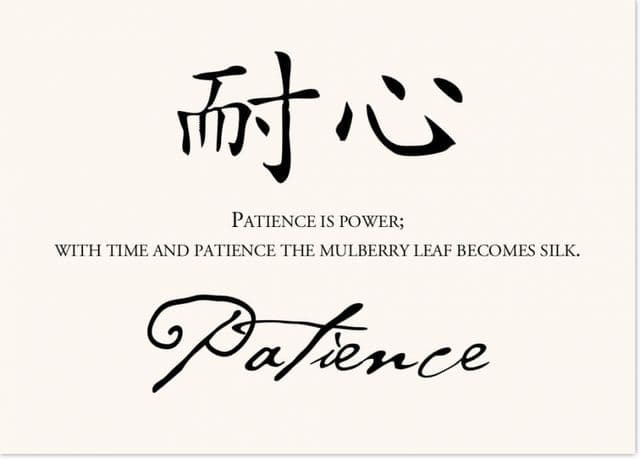
Chinese Proverbs
Chinese and English are two radically different languages, each with a long and rich history. Both languages evolved independently from each other, which makes any similarities all the more interesting. Today we will discuss some Chinese proverbs (諺語 yànyŭ) and idioms (成語 chéngyŭ) that have—almost exact—English equivalents. Does this mean that these expressions are universal truths; identical ideas that have developed on opposite ends of the world? Maybe, let us know what you think.
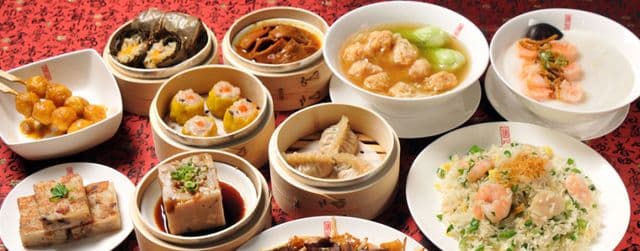
8 Things I Miss About China
I’ve recently returned from a year of living abroad in China and oh how I miss it! For someone who went to China kicking and screaming, my homecoming has been bittersweet. At the behest of my employers (actually no, I think this is great because all I’ve been doing since returning home is complaining to friends and family about how I want to be back in China so they probably appreciate that I’m letting it all out) I’ve been asked to write about what I miss about China. I have eight things here, but keep in mind; I could go on for DAYS about what I miss, so eight seemed like a good cap.
Diary of a China Newbie
My first abroad experience was Taiwan. I went there to study Mandarin through a partnership with my home school, Mississippi State University. While I was in the country I met a lot of very interesting expatriates. One of the veteran teachers there told me, “if you enjoy Taiwan, you should try China. Taipei is like a retirement city compared to Shanghai”.

Living Abroad: Why China?
I won’t deny that I’ve asked myself and I’ve been asked that several times: why live in China? Going abroad, sure, that sounds like an adventure: new cultures, new food, music etc. A different flavor from the everyday life you know. But China? It’s not a different flavor but rather a different dish altogether. It’s more like an adventure straight out of National Geographic: harsh conditions, eating funny looking foods and languages that make you cry. Yet China is where the masses are flocking to. And after living here for over a year, I can give you the inside scoop as to why this massive rooster shaped country is so appealing.
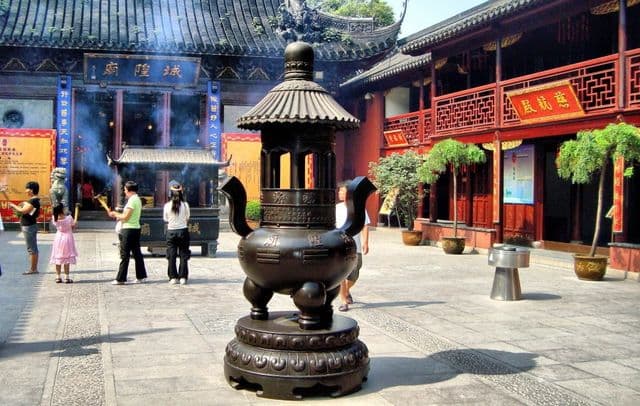
Living in a Third Tier City
To many of us the thought of going to a third tier Chinese city can be pretty daunting. Although, if you’re looking to experience the “real” China there is no other option.

Medical Facilities
Medical care in China is very varied in such a vast country. In major municipalities like Shanghai, there is a wealth of medical care available. Expats should feel secure regarding medical facilities, where there are usually three types of providers: Western-style hospitals and clinics, regular clinics in local hospitals, and VIP clinics in local hospitals.

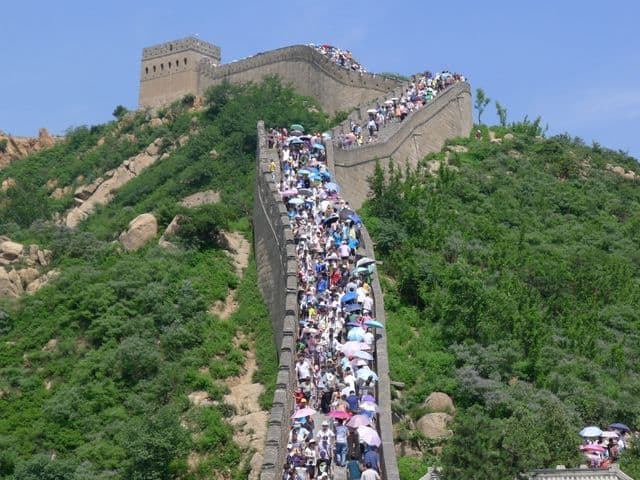
My trip to Beijing – Part II
This was the day we were really looking forward to,our trip to the Great Wall was something we had begun discussing when first formulating the trip! It is of course a must see destination on any trip to China. As you already know from part I of the story, we were in Beijing during the October National Holiday, which means the crowds would be thick. Because of the size (5,500 miles), there are many different parts of the Great Wall to see and explore, we knew that with only one day we could probably only see one section and wanted to make sure it was great.

Settling in for a while
It has been quite a while since I’ve written anything on our blog so I figure that now that Brett is off mountain biking and I don’t have work for a few days, it would be a good chance to get caught up. Everything has been a whirlwind ever since we left Brazil, flew to Texas for a week, then Colorado for another week and then finally ended up in Shanghai, China after almost 24 hours of travel time. We never had jobs while we were traveling Latin America and now that I do it makes it a little harder to find writing time!
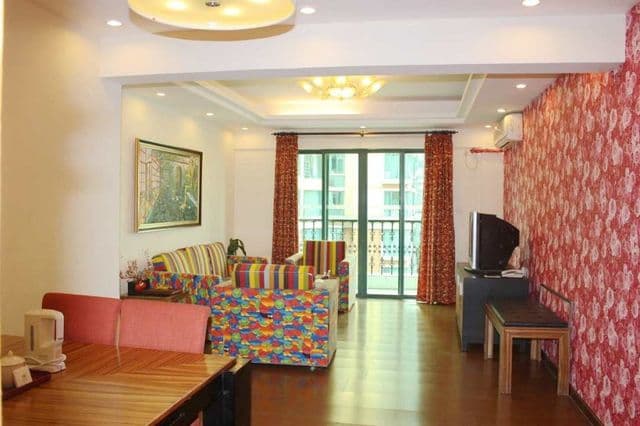
Renting an apartment in China
One of the first questions that many applicants ask when they start thinking about teaching ESL in China is: where am I going to live? Some teaching jobs in China offer housing as part of the compensation package, but some do not. This means that some teachers (usually with the help of their schools) will need to rent an apartment. As China grows and develops, the variety of housing options is multiplying. Part of the fun of teaching abroad in China is figuring out what option is right for you!